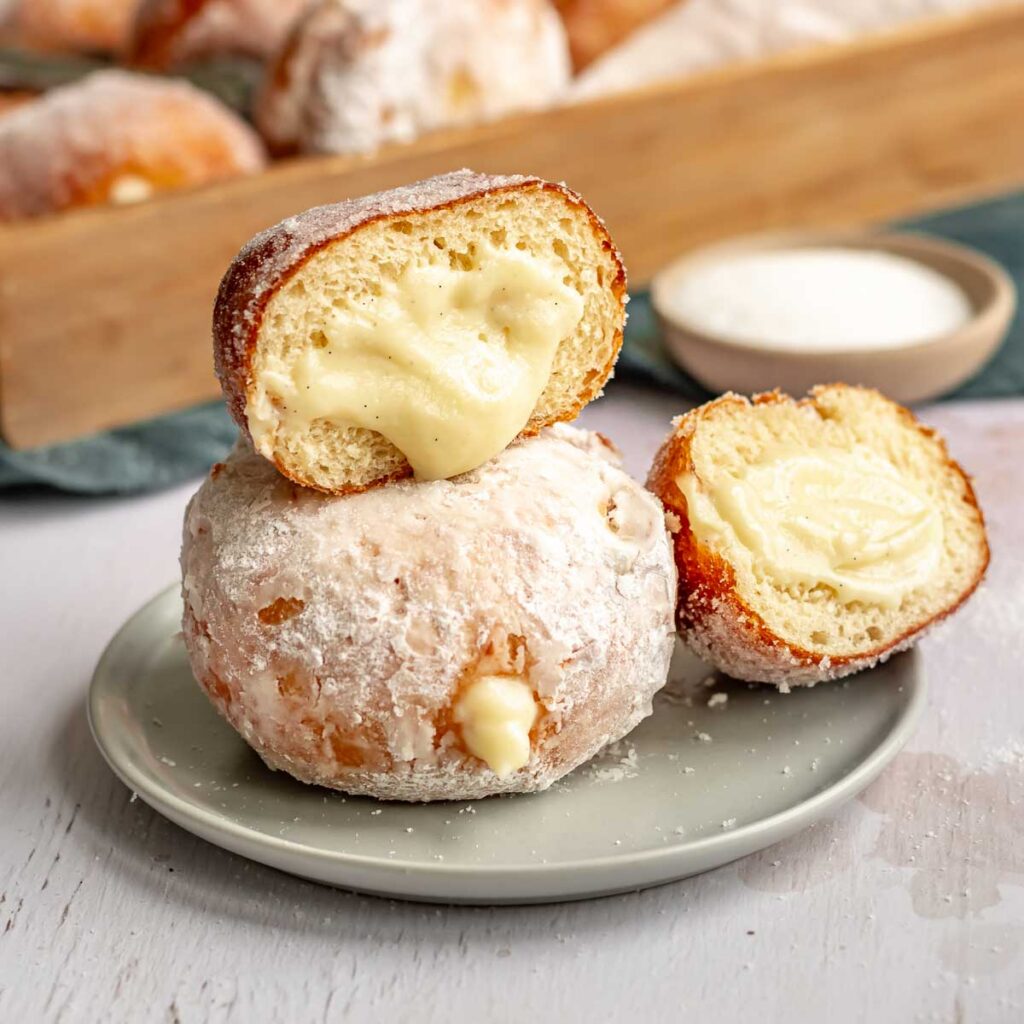

A custard doughnut lives or dies by its filling. The best choice balances flavour, thickness, pipeability, and how it holds up in a warm Australian bakery display or a takeaway box on a summer day.
This guide breaks down which custards work best, why some split or leak, and what to choose for different styles of custard doughnuts.
What makes a custard “work” inside a doughnut?
The best custard for doughnuts is thick, stable, and smooth, with enough richness to taste like a proper dessert after frying. It should pipe cleanly, stay put once filled, and not soak into the crumb.
In practice, that means choosing a custard that is starch-thickened (or starch plus egg), cooled correctly, and whisked to a glossy finish before filling. This is the baseline for reliable custard donuts.
Should they use crème pâtissière or a simpler custard?
Crème pâtissière is usually the best all-rounder because it is designed to be piped into pastries and to hold its shape. It delivers a classic bakery flavour, especially when made with real vanilla and finished with a little butter for sheen.
A simpler custard can still work, but it often needs extra starch to stop it running. For most bakeries and home cooks aiming for consistent custard doughnuts, crème pâtissière is the safer pick.
How thick should custard be for custard doughnuts?
Custard should be thick enough to mound on a spoon and hold a soft peak, but still supple enough to pipe without tearing the doughnut. If it flows like pouring custard, it will leak and migrate into the dough.
A good test is the piping bag test: it should squeeze out smoothly with steady pressure, not burst out like paste and not drip like sauce. That thickness is ideal for custard doughnuts.
Which thickener performs best: cornflour, custard powder, or plain flour?
Cornflour (cornstarch) is the most reliable for a clean, stable set and a silky texture. It thickens quickly, holds well when cooled, and helps prevent weeping when the doughnuts sit for a few hours.
Custard powder is convenient and familiar in Australia, but brands vary and some include extra starches or flavours that can taste artificial. Plain flour can taste “bready” and often sets heavier, so it is less ideal for premium custard doughnuts.
Do egg yolks matter, or can they skip eggs?
Egg yolks matter for flavour, colour, and richness, and they help create that classic bakery custard profile people expect. A yolk-enriched custard also tends to feel thicker and more satisfying at the same starch level.
Egg-free custards can work for dietary needs, but they often rely heavily on starch and can taste flatter. If the goal is the best-tasting custard doughnuts, yolks usually earn their place.
Is custard powder a good choice for Australian-style bakery doughnuts?
Yes, custard powder can be a good choice when they want speed, consistency, and a familiar “Aussie bakery” taste. Many local doughnut shops lean on it because it is predictable across batches.
The trade-off is flavour complexity. If they want a more elevated result, they can use custard powder as a base and improve it with real vanilla extract or vanilla bean paste, plus a touch more yolk. This approach still suits high-volume custard doughnuts.
What type of custard gives the best flavour in custard donuts?
Vanilla crème pâtissière made with real vanilla flavour sets the standard for a rich, balanced filling. It delivers depth without becoming excessively sweet and works especially well with cinnamon sugar, icing sugar, or a light vanilla glaze.
If they want a stronger dairy flavour, a small amount of butter stirred in at the end adds a rounded finish. For the most crowd-pleasing custard donuts, classic vanilla usually beats novelty flavours.
What custard is best for hot, humid Australian conditions?
A slightly firmer custard with a bit more starch is best when the weather is warm, especially in Queensland or during a Sydney heatwave. Heat softens custard, increases leakage, and can thin the texture over time.
They should also cool the custard quickly and keep it chilled until filling. If the donuts will sit in a display cabinet, choosing a more stable filling reduces mess and protects the eating experience of custard donuts.
Can they use whipped custard or custard mixed with cream?
Yes, but it changes the rules. Folding whipped cream into custard makes it lighter and more mousse-like, which many people enjoy, but it becomes less stable and more sensitive to heat.
This style suits donuts served quickly, such as for a weekend market in Melbourne where turnover is fast. For long holds or delivery, a straight custard is safer for tidy custard donuts.
What about Bavarian cream or diplomat cream in donuts?
Diplomat cream (crème pâtissière lightened with whipped cream, sometimes stabilised with gelatine) is excellent when they want a softer bite without losing structure. It is often a sweet spot between richness and lightness.
Bavarian cream typically uses gelatine and can be very stable, but it can feel more set and less “custardy” if over-gelled. When done well, either can elevate custard donuts into patisserie territory.
Do they need gelatine to stop custard leaking?
Gelatine is not required for most standard custards if the starch and cooking method are correct. Many excellent donut fillings rely on starch-thickened custard alone and hold perfectly.
Gelatine becomes useful for long display times, delivery runs, or very warm environments where extra insurance helps. If they add it, they should keep it minimal so the filling still eats like custard in custard donuts.
How can they prevent custard from soaking into the donut?
They can prevent soaking by using a thicker custard, fully cooling it before filling, and avoiding overproofed donuts with an open crumb. A custard that is warm or too loose will seep quickly.
They can also fill close to serving time if possible. For shops doing early-morning frying, keeping custard chilled and filling in controlled batches helps maintain the texture of custard donuts.
Does frying style change which custard works best?
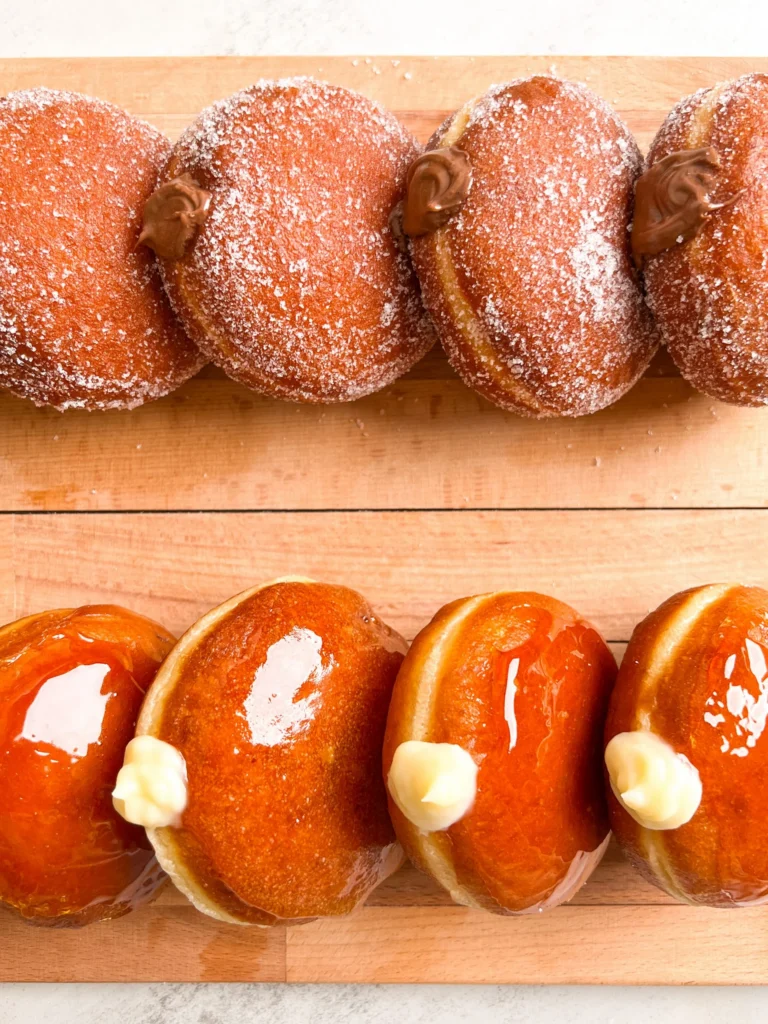
Yes. A lighter, airy donut with a thin crust can tear if the custard is too stiff, while a denser donut can handle a thicker filling. Donuts coated in cinnamon sugar also highlight vanilla custard well, while glazed donuts can handle richer, slightly less sweet fillings.
If they make larger, cream-bun-style donuts, a firmer custard holds up better to handling. Matching texture to structure is key for professional-looking custard donuts.
What are the most common custard mistakes in custard doughnuts?
The most common issues are undercooking the custard, not cooling it properly, and using a custard that is too thin. Under-set custard will look fine at first and then slump and leak after filling.
Another frequent mistake is overwhisking after chilling, which can turn custard grainy or loose if they beat it aggressively. Smooth, controlled whisking produces the cleanest finish for custard doughnuts.
Which custard should they choose for different goals?
For a classic Aussie bakery result, custard powder boosted with real vanilla is a practical winner. For the best flavour and texture, vanilla crème pâtissière is usually the top pick.
For lighter, premium doughnuts served quickly, diplomat cream is ideal. For long holds, warm weather, or delivery, a slightly firmer crème pâtissière, or a gently stabilised version, keeps custard doughnuts neat and consistent.

What is the simplest “best bet” recommendation?
The simplest best bet is a thick vanilla crème pâtissière, cooled fully, whisked smooth, and piped chilled. It offers a reliable balance of flavour, stability, and ease, while Kinder Bueno Cookies bring a more distinctive confectionery-inspired option for home kitchens and small Australian bakeries.
If they need maximum convenience, a good-quality custard powder method is the next best option, provided they make it thick and improve the flavour. Either approach produces reliable custard doughnuts.
FAQs (Frequently Asked Questions)
What makes a custard filling ideal for custard doughnuts?
An ideal custard filling for custard doughnuts is thick, stable, smooth, and rich enough to taste like a proper dessert after frying. It should pipe cleanly, hold its shape once filled, and not soak into the doughnut crumb. Typically, this means using a starch-thickened (or starch plus egg) custard, cooled correctly and whisked to a glossy finish before filling.
Should I use crème pâtissière or a simpler custard for my custard doughnuts?
Crème pâtissière is generally the best all-round choice for custard doughnuts because it is designed to be piped into pastries and hold its shape well. It provides a classic bakery flavour, especially when made with real vanilla and finished with a little butter for sheen. Simpler custards can work but often require extra starch to prevent running. For consistent results, crème pâtissière is the safer option.
How thick should the custard be for filling doughnuts?
The custard should be thick enough to mound on a spoon and hold a soft peak but still supple enough to pipe without tearing the doughnut. If it flows like pouring custard, it will leak and soak into the dough. A good test is the piping bag test: it should squeeze out smoothly with steady pressure—not burst out like paste or drip like sauce—ensuring ideal thickness for custard doughnuts.
Which thickener works best in custard for doughnuts: cornflour, custard powder, or plain flour?
Cornflour (cornstarch) is the most reliable thickener for a clean, stable set and silky texture in custard fillings. It thickens quickly, holds well when cooled, and helps prevent weeping during storage. Custard powder is convenient and popular in Australia but varies by brand and may include extra starches or artificial flavours. Plain flour can taste ‘bready’ and produce heavier textures, making it less ideal for premium custard doughnuts.
Do egg yolks matter in custard fillings for doughnuts? Can they be skipped?
Egg yolks significantly contribute to flavour, colour, richness, and help create the classic bakery custard profile expected in doughnuts. Yolk-enriched custards also tend to feel thicker and more satisfying at the same starch level. While egg-free versions can work for dietary needs by relying heavily on starch, they often taste flatter. For the best-tasting custard doughnuts, including egg yolks is usually recommended.
Is using custard powder suitable for Australian-style bakery custard doughnuts?
Yes, custard powder can be a good choice when speed, consistency, and a familiar ‘Aussie bakery’ taste are priorities. Many local doughnut shops use it because it delivers predictable results across batches. However, flavour complexity may be limited compared to fresh crème pâtissière. To elevate flavour while using custard powder as a base, add real vanilla extract or vanilla bean paste plus extra egg yolks—this approach suits high-volume Australian-style custard doughnuts.